
Podcast: Play in new window | Download (Duration: 10:45 — 20.2MB) | Embed
Subscribe or Follow Spotify | Android | Pandora | iHeartRadio | TuneIn | Deezer | RSS | More
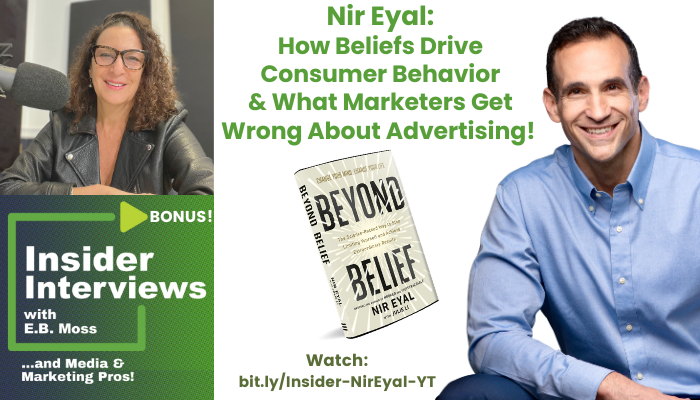
I found a smiling Buddha medallion on the sidewalk on my way to the Uber, and I believed it was a sign it would be a good trip. Then I got in the car and discovered my fellow passenger was Nir Eyal — behavioral designer, Stanford lecturer, and bestselling author with a new book to promote at SXSW: “Beyond Belief.” We were both headed for the same flight. I, of course, invited him to record a podcast episode and he invited me into the United Club lounge record there!
I believed in my good fortune, and belief systems turned out to be the focus of Nir’s work.
“We like to say that you’ll believe it when you see it — but in fact, that’s not true. The opposite is true: you see it when you believe it.”
— Nir Eyal
What I captured in 20 minutes was a masterclass in consumer psychology from one of the most cited thinkers in behavioral design. And a lot of fun. Nir’s first book, “Hooked”, gave marketers and product builders a framework for engineering repeat engagement. Yup, he explains his four-step model that of why users keep returning to things like Facebook, Duolingo, Slack, and even my beloved Starbucks.
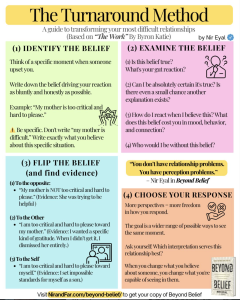
 His follow-up, “Indistractable,” tackled the flip side: how to protect your own focus in a world engineered to steal it. And his new third book makes the case that advertising’s most powerful function isn’t awareness or recall. It’s actually shaping what using a product feels like. Or tastes like.
Nir backs this up citing a Stanford fMRI study where participants tasted the exact same wine twice — once labeled cheap, once labeled expensive. Of course they rated the “expensive” pour as tastier, and brain scans confirmed they were genuinely experiencing more pleasure.
The implication for marketers is significant: brand belief doesn’t just influence what consumers say about a product — it rewires how they perceive it in real time. As Nir puts it, “we are creating the experience, just as we’re creating the coffee and the cup.”
We also get into distraction and focus ( — territory that’s directly relevant to anyone managing teams, creative output, or their own attention. Nir draws a clean line between traction (any action that moves you toward what you planned to do) and distraction (anything that doesn’t) — and gave me a HUGE a-ha understanding about the common assumption that multitasking is counterproductive. You’re going to want to learn about the distinction between single-channel and multi-channel multitasking. It’s how high performers and even distracted performers like me, can structure their time. (Nir shares his personal system for consuming long-form reading; it’s a practical tactic worth stealing.)
This conversation was unplanned, unscripted, and recorded forty minutes before boarding a flight. That it delivered this much useful thinking on marketing, behavioral design, consumer psychology, and focus is a testament to how deeply Nir has thought about all of it — and, okay, maybe to the Buddha medallion.
Key Moments:
00:00 How a serendipitous ride to the airport turns into an impromptu bonus episode with author Nir Eyal
01:34 Nir’s background: behavioral designer, Stanford lecturer, and author of three books on habits, distraction, and belief
02:16 The Hooked framework: the four-step model behind every habit-forming product — and how to apply it
03:45 Beyond Belief: why advertising’s real job is shaping experience, not just building awareness
06:07 The Stanford fMRI wine study: proof that brand belief changes consumer perception at a neurological level
07:50 What marketers consistently underestimate: the experience loop of belief, anticipation, and confirmation
08:15 Facts vs. beliefs: a distinction with major implications for messaging and brand strategy
09:08 The one condition a product must meet before habit formation is even possible
12:45 Traction vs. distraction: a framework for reclaiming focus — and why the difference isn’t the behavior
14:11 Why planned downtime isn’t distraction — and how to stop moralizing screen time
15:37 The multitasking reframe: single-channel vs. multi-channel, and when doing two things at once actually works
17:04 Nir’s read-at-the-gym system: a practical productivity hack for high-volume information consumers
18:38 How beliefs shape attitudes and perception — what we’re able to see
19:33 Persuasion vs. coercion: the ethical and commercial case for “good” behavioral design
Connect with Nir Eyal
LinkedIn: https://www.linkedin.com/in/nireyal/
Instagram: https://www.instagram.com/nireyal
Get his book Beyond Belief: geni.us/beyondbelief
Connect with E.B. Moss and Insider Interviews: With Media & Marketing Experts
LinkedIn: https://www.linkedin.com/in/mossappeal
Instagram: https://www.instagram.com/insiderinterviews
Facebook: https://www.facebook.com/InsiderInterviewsPodcast/
Threads: https://www.threads.net/@insiderinterviews
If you enjoyed this episode, follow Insider Interviews, share with another smart business leader, and leave a comment on @Apple or @Spotify… or a tip in my jar!: https://buymeacoffee.com/mossappeal!